Custom WordPress
A bespoke theme presents the business, catalogue and trade information.

A useful trade enquiry starts with the right questions.
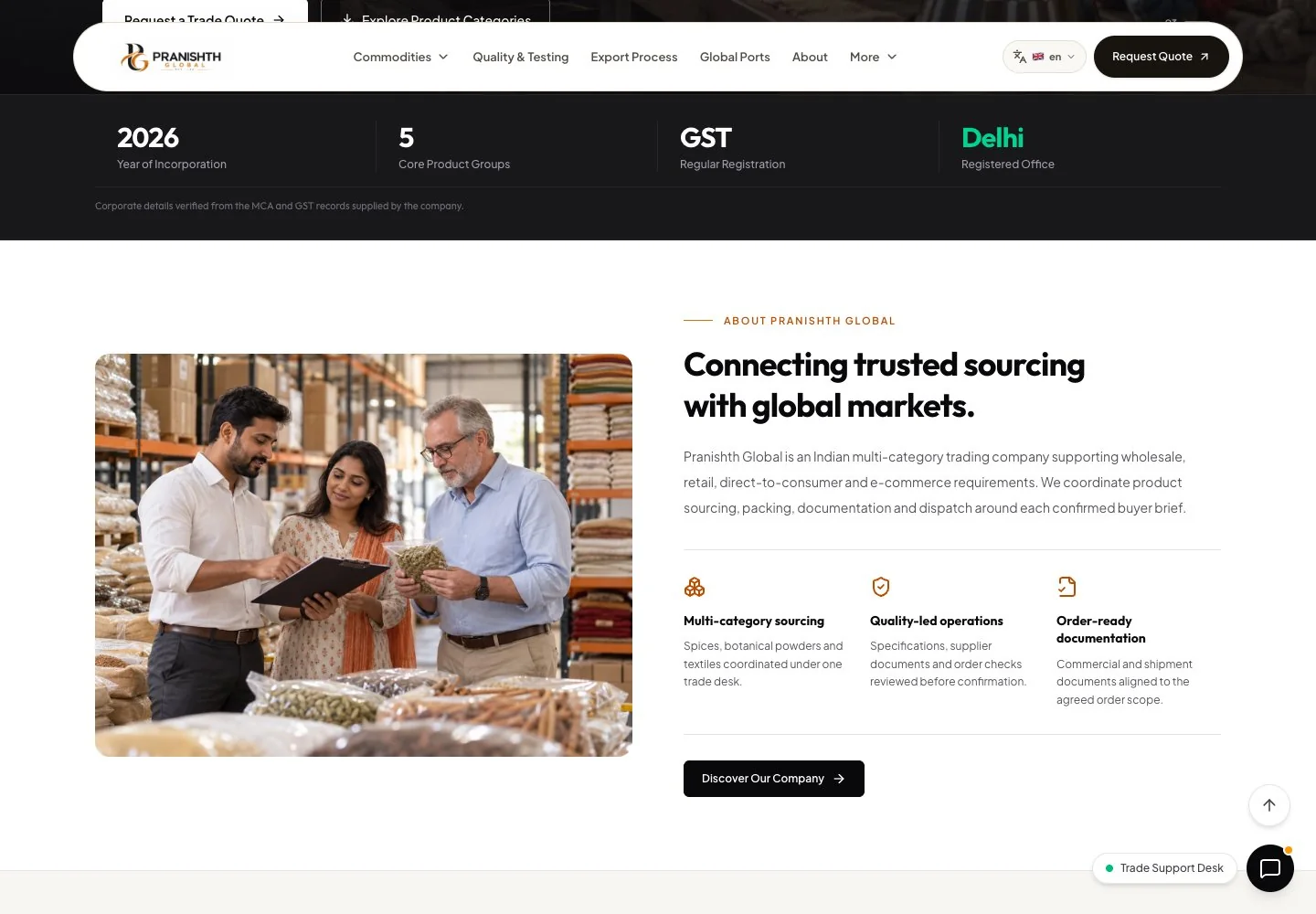
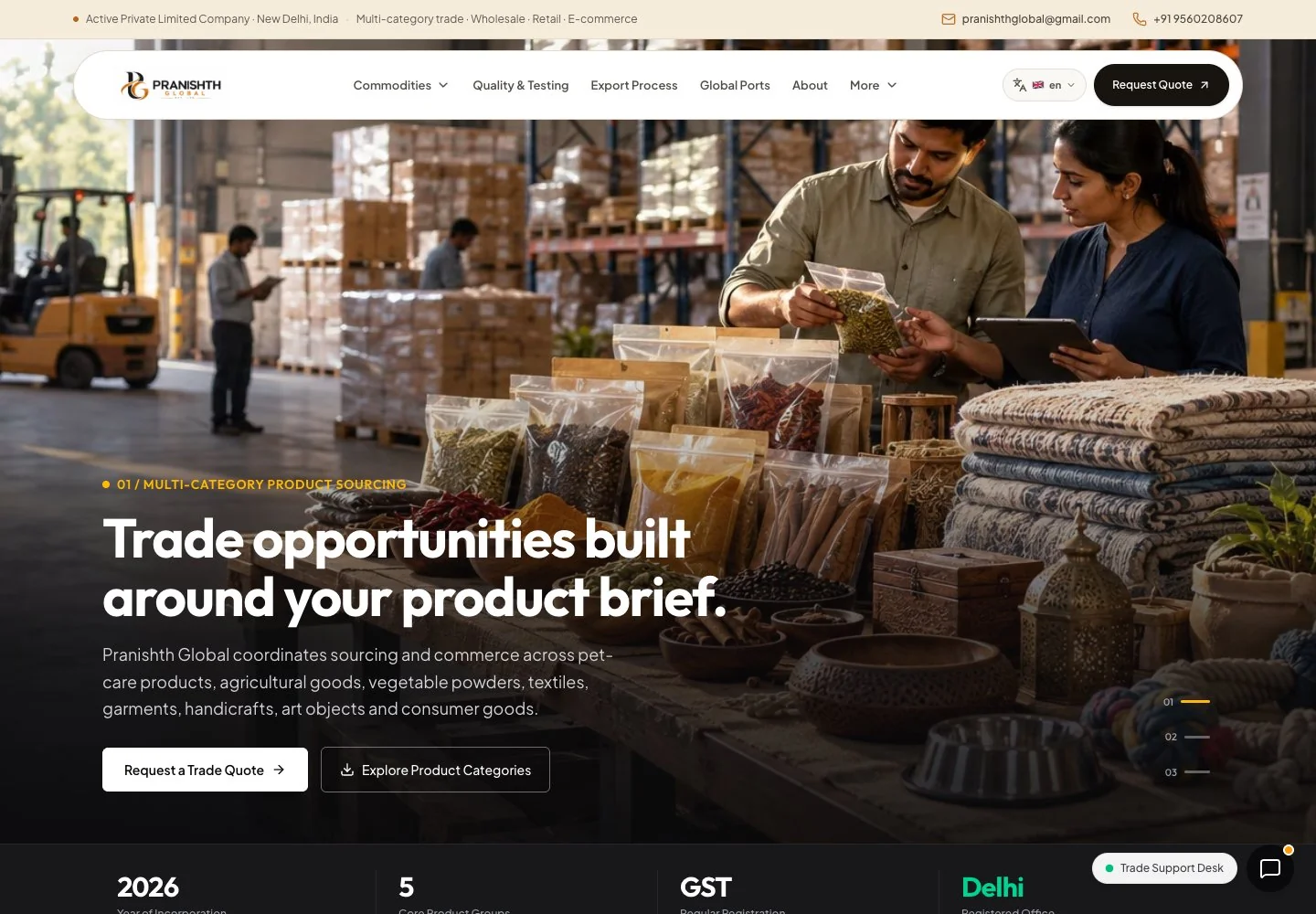
Pranishth Global presents a multi-category sourcing business covering products such as spices, botanical powders and textiles. Its website needs to explain both the catalogue and the process behind an order.
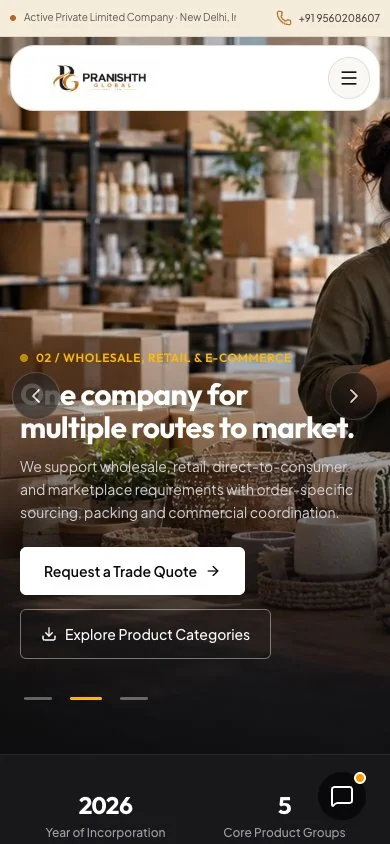
The custom WordPress frontend combines product categories, a staged trade lifecycle, destination planning and a detailed quotation form. A warm neutral palette and dark editorial sections give dense business information a clear hierarchy.
The brief
A generic contact form would leave too much unanswered. The experience needs to bring product, volume, packing and destination into the conversation before commercial details are confirmed.
Make a multi-category sourcing offer understandable at a glance.
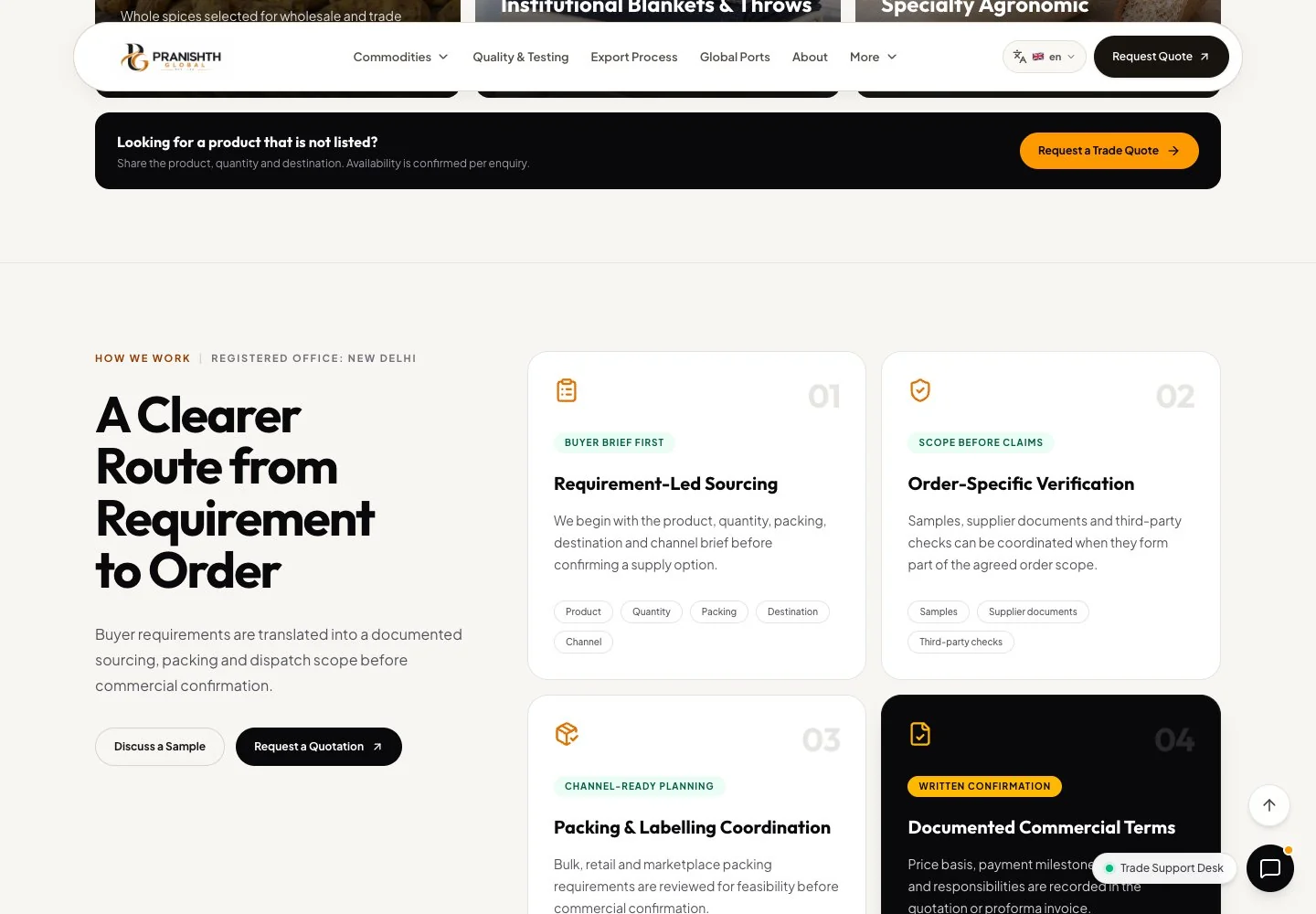
Show the stages from requirement review to dispatch coordination.
Collect product, volume, destination and packing context in the quotation journey.
Distinguish indicative planning from confirmed commercial terms.
Workflow, pipeline & structure
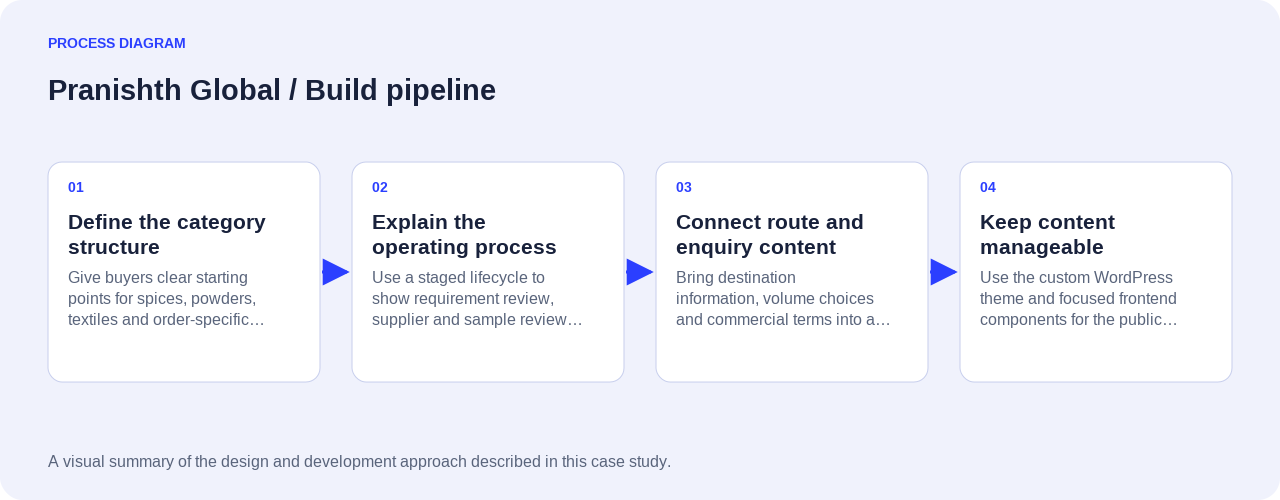
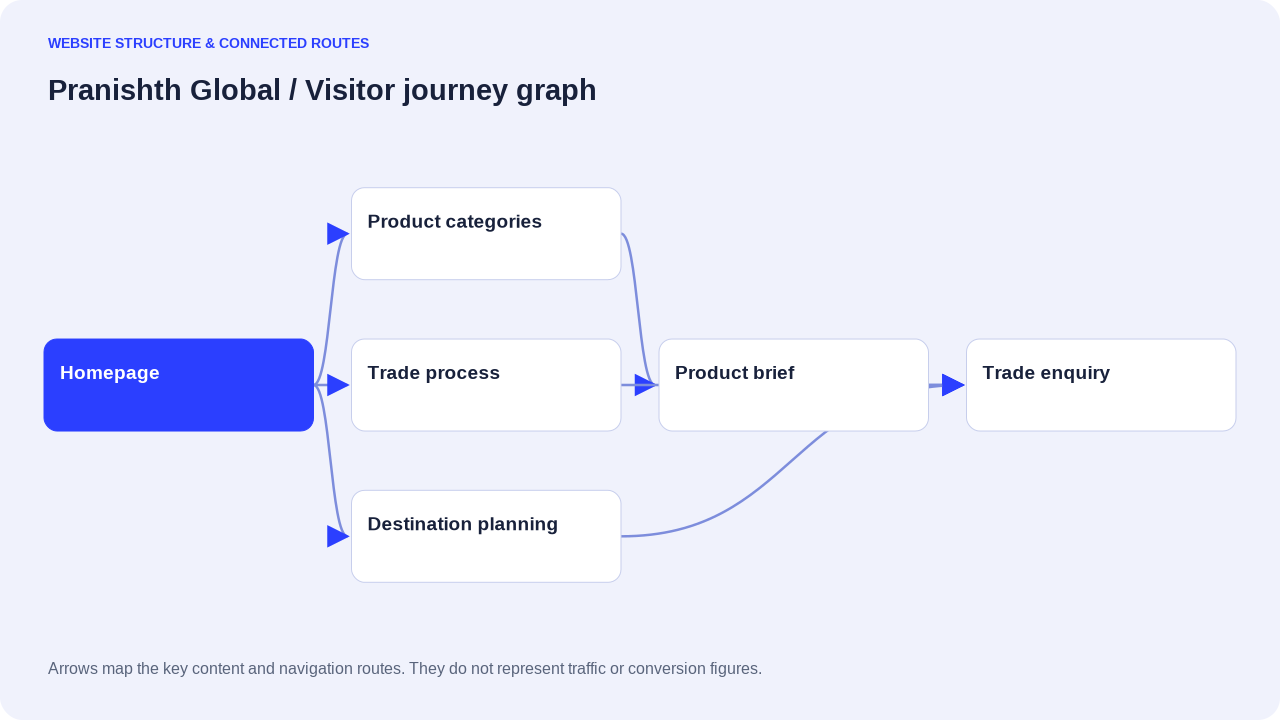
Follow the build process and the key routes through Pranishth Global. These diagrams explain the journey; they are not traffic or conversion charts.
Design & development approach
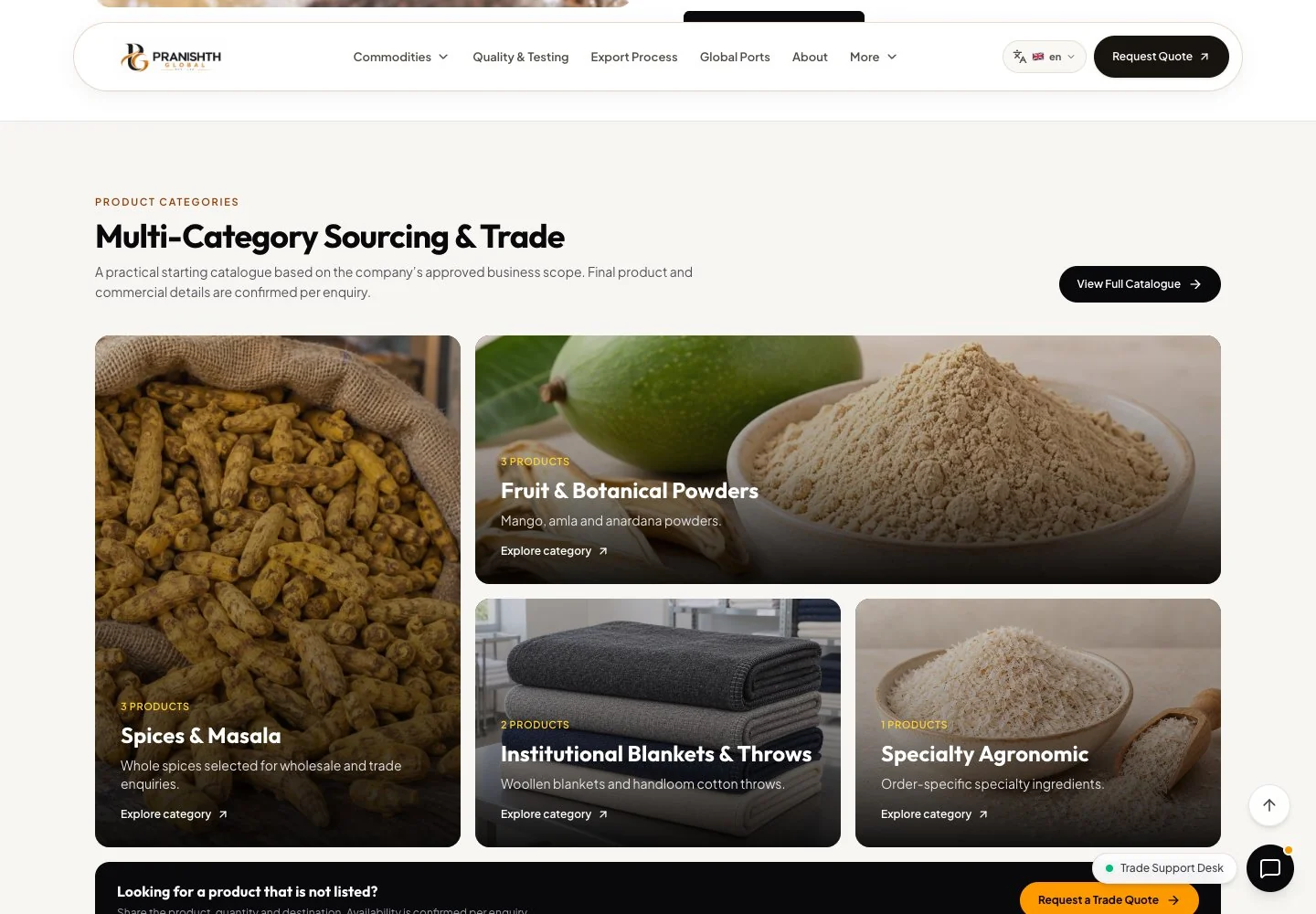
Give buyers clear starting points for spices, powders, textiles and order-specific sourcing requests.
Use a staged lifecycle to show requirement review, supplier and sample review, quotation, preparation and dispatch.
Bring destination information, volume choices and commercial terms into a more specific quotation brief.
Use the custom WordPress theme and focused frontend components for the public content and interactive sections.
The build
A bespoke theme presents the business, catalogue and trade information.
Interactive lifecycle and route sections break dense information into navigable views.
Product, shipment and contact fields create a structured trade brief.
Distinct product groups keep the breadth of the offer understandable.
Route information provides context while keeping freight and terms order-specific.
Editorial sections, labels and summaries help visitors navigate detailed information.
The website / In detail
Screenshots captured from the public website, showing the design and its key content areas. Scroll to explore.
Feature focus / Trade quotation
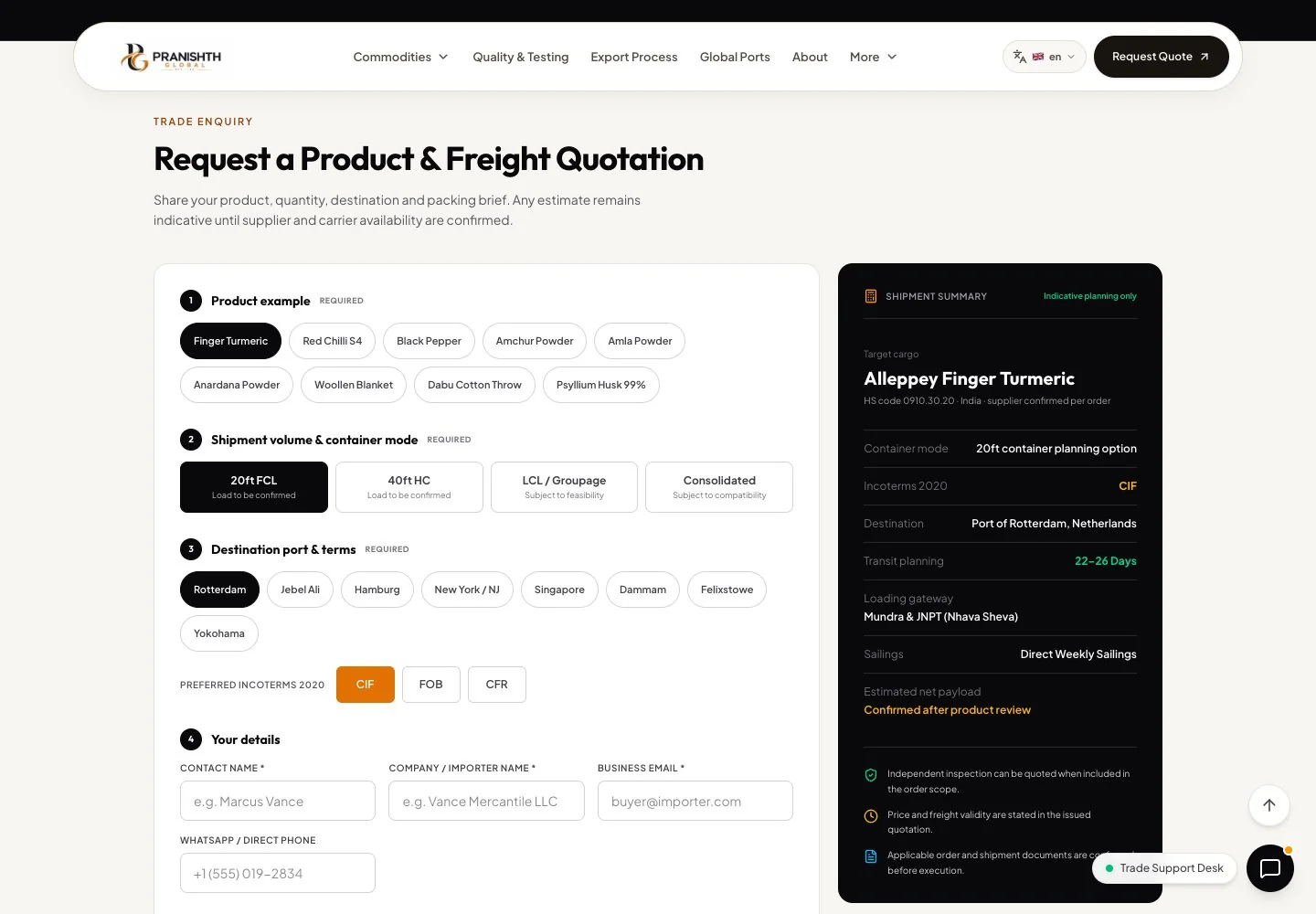
The quotation interface asks for more than a message. It puts product selection, shipment mode, destination and specifications alongside an indicative shipment summary.
Choose the product and describe the relevant specification and packing needs.
Select a container or groupage option, destination and preferred commercial terms.
Contact details and delivery requirements complete the enquiry; final terms are confirmed separately.
Design decisions
A broad trading scope can become vague.
Lead with concrete product groups and make the buyer brief the centre of the enquiry.
Logistics details can look like fixed promises.
Present planning information in context and reserve final terms for the confirmed quotation.
A long B2B page can be difficult to scan.
Break the content into labelled stages, clear categories and a structured enquiry route.
Experience outcomes
Buyers can see the categories and the way a sourcing request proceeds.
The form captures useful product and shipment context before a conversation begins.
The website explains the process while keeping commercial confirmation order-specific.